Patt engineering guides
Plasma nitriding vs. gas nitriding & hard chrome plating
Compare pulse plasma ion nitriding, controlled gas nitriding and hard chrome for extrusion dies and adapters: layers, geometry, dimensions and qualification.
Engineering reference
Choose the process around the working surface
For extrusion dies and adapters (adaptors), compare the required surface with the complete part: core strength, wear duty, corrosion exposure and dimensional limits. Pulse plasma ion nitriding, controlled gas nitriding and hard chrome plating use different mechanisms and can each be specified for suitable applications. Patt performs in-house pulse plasma (ion) nitriding in Saint-Eustache (Greater Montreal), Quebec, Canada (operating since 1992) for customers across Quebec, Ontario, Canada, the US Midwest, New England and international projects — treating loads up to 1,200 × 1,200 mm (47.2 × 47.2 in) and 2,000 kg (4,409 lb) at 350–540 °C with documented 250 µm+ diffusion case depth on H13 tool steel and low-temperature S-phase / expanded-martensite stainless steel nitriding.
| Selection factor | Pulse plasma / ion nitriding | Controlled gas nitriding | Hard chrome plating |
|---|---|---|---|
| Surface mechanism | Nitrogen diffusion driven by a plasma process; a compound layer can be tailored. | Nitrogen diffusion from a controlled gas atmosphere; a compound layer can be tailored. | An electrodeposited chromium coating adds a separate surface layer. |
| Compound layer / adhesion | Specify diffusion depth, hardness and allowed compound-layer thickness. | Controlled gas nitriding can limit or avoid a compound layer; a brittle white layer is not inevitable. | Surface preparation, adhesion, coating thickness and finishing are key. |
| Dimensions | Low distortion is achievable; growth and residual stress still need allowance. | Low distortion is achievable; cycle and prior heat treatment matter. | Coating buildup changes size; allow for plating and any finish grinding. |
| Slots, bores and sharp edges | Validate plasma access, masking, fixturing and hardness on the actual geometry. | Validate gas access, masking and case uniformity on the actual geometry. | Current distribution can cause excess edge buildup or thin coverage in recesses. |
| Damage mechanisms | No deposited coating interface to delaminate; an overloaded case or substrate can still crack. | Case or substrate damage remains possible under unsuitable stress or heat treatment. | Cracking, wear or adhesion failure can expose the substrate. |
| Selection for extrusion tooling | Match alloy, core condition, case depth and corrosion requirements to the cycle. | Match layer specifications and dimensional requirements to controlled process capability. | Review corrosion barrier, wear duty, edge geometry and repair requirements. |
These are process-selection principles, not a claim that every nitrided case or plated surface performs the same way. Qualify the alloy, prior heat treatment, final geometry, dimensional tolerance and service environment together.
Engineering reference
Specify the part and acceptance criteria
| Input | Specify | Acceptance evidence |
|---|---|---|
| Material | Exact alloy, certification, prior heat treatment and core hardness | Material certificate and core-hardness reading |
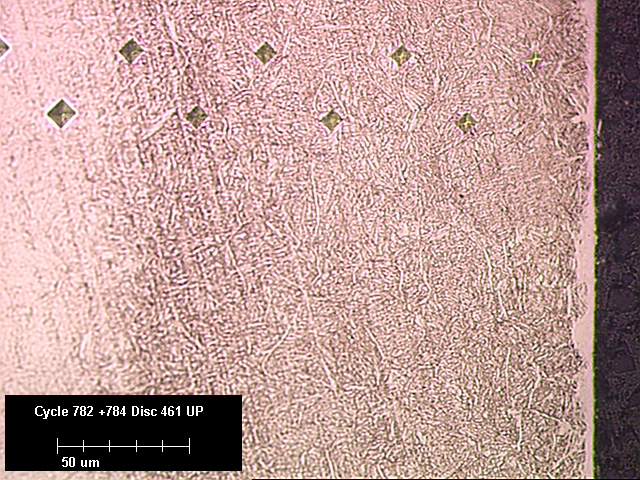
| Surface | Required case depth, surface hardness, compound-layer limit and areas to mask | Agreed microhardness traverse and metallographic examination |
| Dimensions | Critical slot width, edges, flatness, surface finish and final tolerances | Before / after dimensional inspection on agreed features |
| Corrosion duty | Resin, additives, cleaning chemistry and operating temperature | A corrosion test relevant to the intended service |
| Stainless steel | Grade, starting microstructure and low-temperature process requirement | Confirm the targeted expanded phase and corrosion response on that alloy |
Patt’s published plasma process window is 350–540 °C (662–1,004 °F), selected for the alloy and previous heat treatment. Final process temperature and time follow the material and case specification; they are not one setting for every die or adapter.
Engineering reference
Low-temperature stainless treatment & S-phase
For suitable austenitic stainless steels, low-temperature plasma nitriding can target expanded austenite (S-phase). Do not apply the same phase label automatically to martensitic 420-family steel or a proprietary alloy. Confirm the starting microstructure, treatment response and corrosion requirement for the exact grade.
Use Patt’s low-temperature stainless nitriding information and the tool steel selection matrix to prepare a material-specific enquiry.
Return to Pulse plasma / ion nitriding · All engineering guides
Discuss your project
Tell us what you need.
Send the polymer, throughput and operating conditions, or the drawing and material requirements for your part.
sales@patt-tech.com