PCR, rigid PVC & aggressive polymers
Material and flow-path choices for PCR, rigid PVC and other aggressive polymers, fluoropolymers and related corrosive off-gassing environments.
ExploreMonoblock filtration platform
A constant-pressure monoblock screen changer and polymer melt filter with backwashing for post-consumer recycled plastics (PCR), rigid PVC and other aggressive polymers. Match corrosion resistance, wear performance and flow geometry to your line.
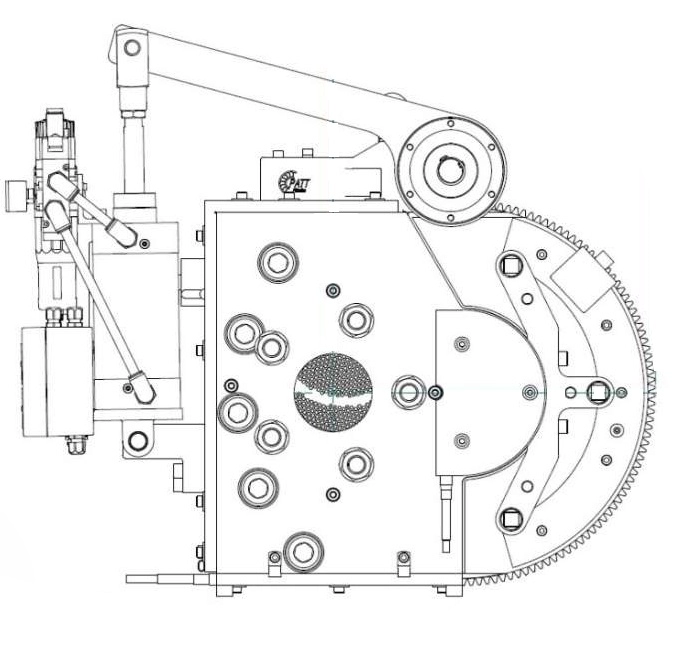
Rotary IV
| Model | Active filter area | Estimated throughput | Heating | Max. pressure | Weight |
|---|---|---|---|---|---|
| Rotary IV A | 10–48 cm²1.55–7.44 in² | 30–250 kg/h70–550 lb/h | 3.2 kW | 400 bar5,800 psi | 100 kg220 lb |
| Rotary IV B | 38–100 cm²5.89–15.5 in² | 100–520 kg/h220–1,100 lb/h | 4.8 kW | 448 bar6,500 psi | 152 kg335 lb |
| Rotary IV C | 85–184 cm²13.18–28.52 in² | 210–960 kg/h460–2,100 lb/h | 9.8 kW | 448 bar6,500 psi | 348 kg767 lb |
| Rotary IV D | 150–385 cm²23.25–59.68 in² | 380–2,000 kg/h840–4,400 lb/h | 13 kW | 448 bar6,500 psi | 954 kg2,103 lb |
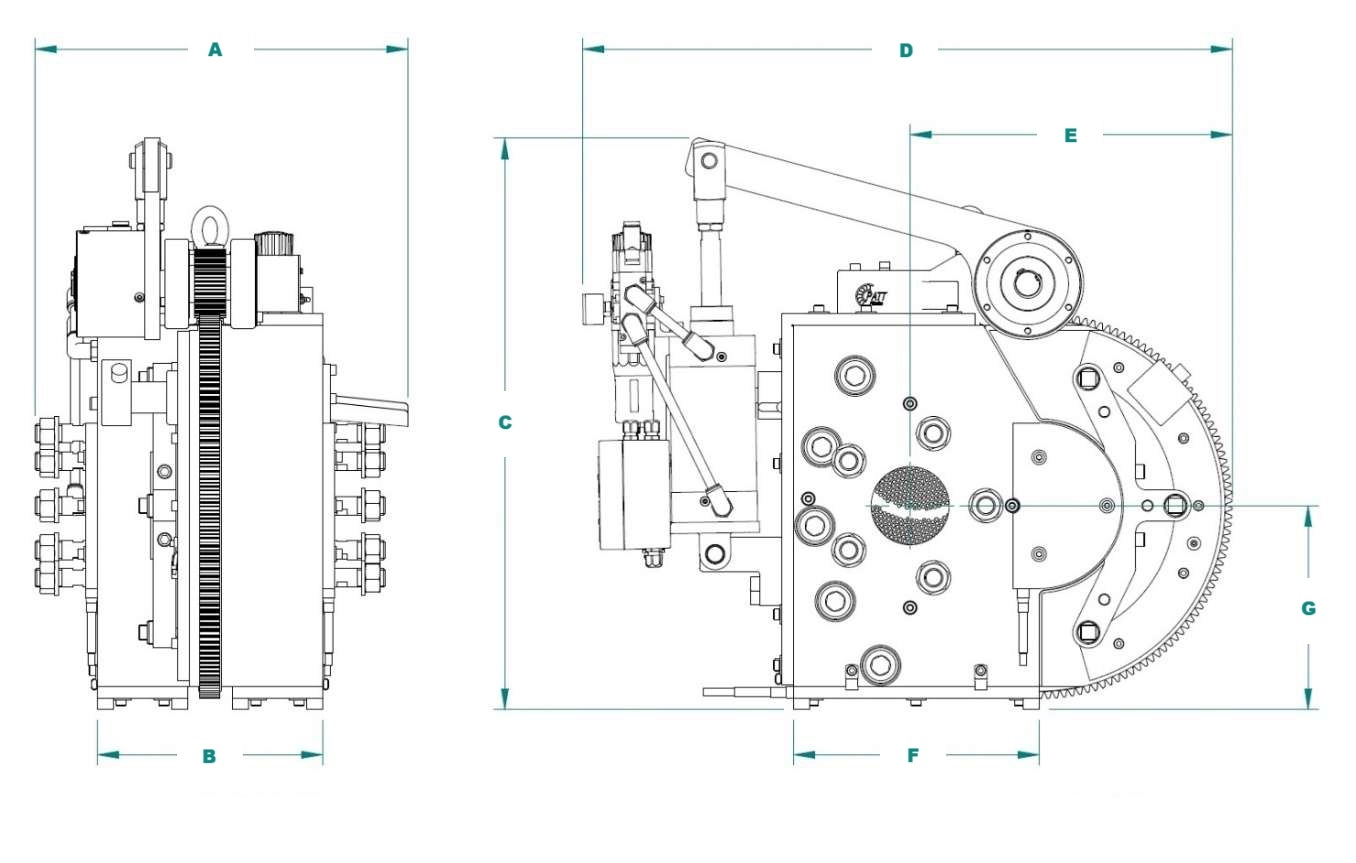
| Model | A | B | C | D | E | F | G |
|---|---|---|---|---|---|---|---|
| Rotary IV A | 280 mm11.02 in | 180 mm7.09 in | 580 mm22.83 in | 570 mm22.44 in | 251 mm9.88 in | 170 mm6.69 in | 166 mm6.54 in |
| Rotary IV B | 300 mm11.81 in | 224 mm8.82 in | 586 mm23.07 in | 676 mm26.61 in | 315 mm12.4 in | 205 mm8.07 in | 203 mm7.99 in |
| Rotary IV C | 355 mm13.98 in | 288 mm11.34 in | 733 mm28.86 in | 875 mm34.45 in | 419 mm16.5 in | 245 mm9.65 in | 258 mm10.16 in |
| Rotary IV D | 681 mm26.81 in | 435 mm17.13 in | 1,020 mm40.16 in | 1,085 mm42.72 in | 550 mm21.65 in | 270 mm10.63 in | 334 mm13.15 in |
Rotary III and Rotary IV combine continuous screen changing with backwashing for polymer melt filtration. Screen renewal, backwashing and pressure control work together to manage contamination.
Model selection
| Selection factor | Application guidance |
|---|---|
| Primary niche | Monoblock melt-contact construction where corrosion and wear are major maintenance drivers. |
| Applications to review | PCR, rigid PVC and other aggressive polymers, fluoropolymers, filled compounds and high-temperature engineering resins; suitability depends on actual formulation and decomposition conditions. |
| Material selection | Specify the body alloy, nitrided case, cleaning exposure and allowable wear as one package. See the separate Patt steels page. |
| Temperature and pressure | Brochure temperature capability up to 450 °C. Final allowable pressure at temperature, seals, instrumentation and material condition are confirmed for the configuration. |
Application focus
Rotary IV is intended for services where corrosive decomposition products, abrasive fillers or elevated processing temperatures shorten component life.
Material and flow-path choices for PCR, rigid PVC and other aggressive polymers, fluoropolymers and related corrosive off-gassing environments.
ExploreWear-focused construction for glass, mineral, carbon and other abrasive filler systems.
ExploreConfigured for high-temperature engineering polymers where thermal stability and residence time are critical.
ExploreRigid PVC releases corrosive decomposition products when it overheats, and filled compounds wear flow surfaces. Rotary IV is the Patt PVC screen changer for those duties: a monoblock body without a bonded coating interface, continuous rotary screen renewal and backwashing. As a pipe extrusion screen changer on rigid PVC pipe and profile lines, it holds differential pressure steady without stopping the extruder for routine screen changes. As a compounding screen changer, it suits filled and abrasive formulations where wear dictates the body material. On PCR recycling lines it acts as a continuous backflush screen changer, cleaning loaded screen areas by backwashing while production continues. Material selection is confirmed for each resin, temperature and cleaning practice.
Integrated surface and materials engineering
The monoblock concept avoids a dissimilar coating or liner interface in the main body. Final material selection and qualification remain application-specific.
Our process
Review the polymer or part, operating conditions, drawings and production targets.
Coordinate flow geometry, material, surface treatment and the installation envelope.
Bring machining, nitriding and dimensional checks together in our Quebec facility.
Discuss installation, operation, cleaning and ongoing service with the team who built it.
Patt Technologies
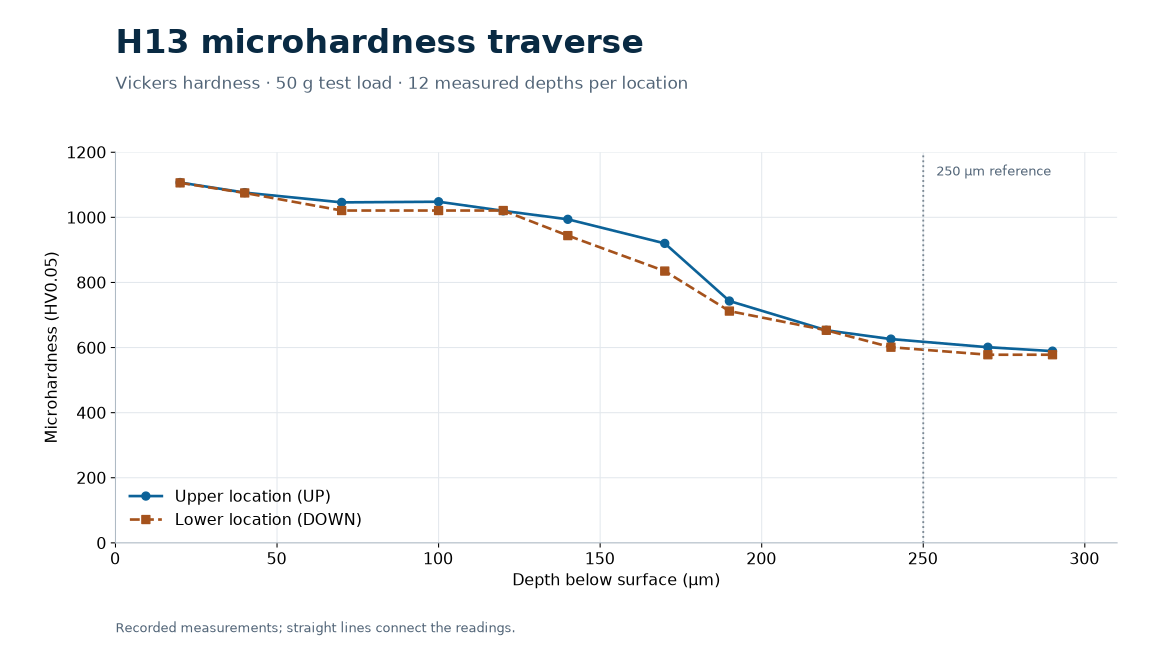
Review the micrographs and 24-point microhardness traverse from the published technical case study.
Explore
See the geometry, installation envelope and material options behind the Patt wave upgrade.
ExploreEngineering reference
Compare screen changer architectures · Review throughput and active-area sizing
Discuss your project
Send the polymer, throughput and operating conditions, or the drawing and material requirements for your part.
sales@patt-tech.com