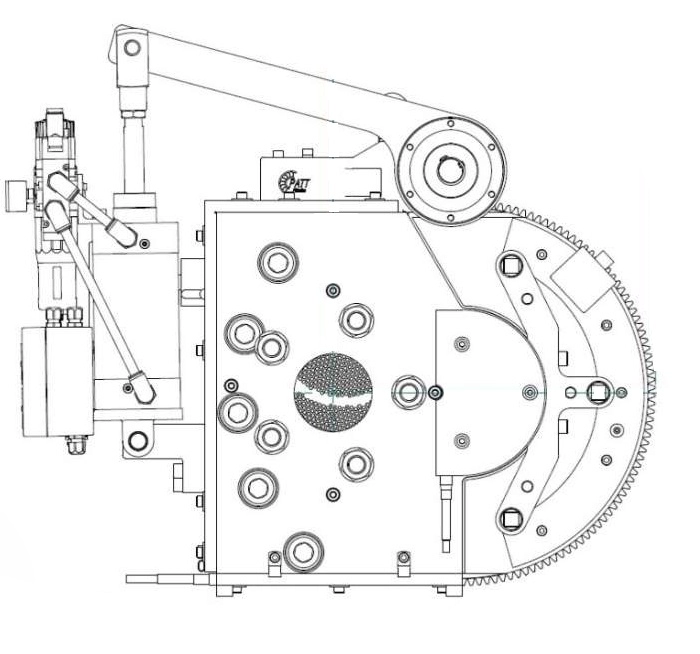
Rotary III
The proven general-purpose platform, available across seven frame sizes and a broad operating envelope.
ExploreContinuous melt filtration
Patt rotary systems introduce clean filtration media continuously while adaptive control holds the selected differential-pressure condition.
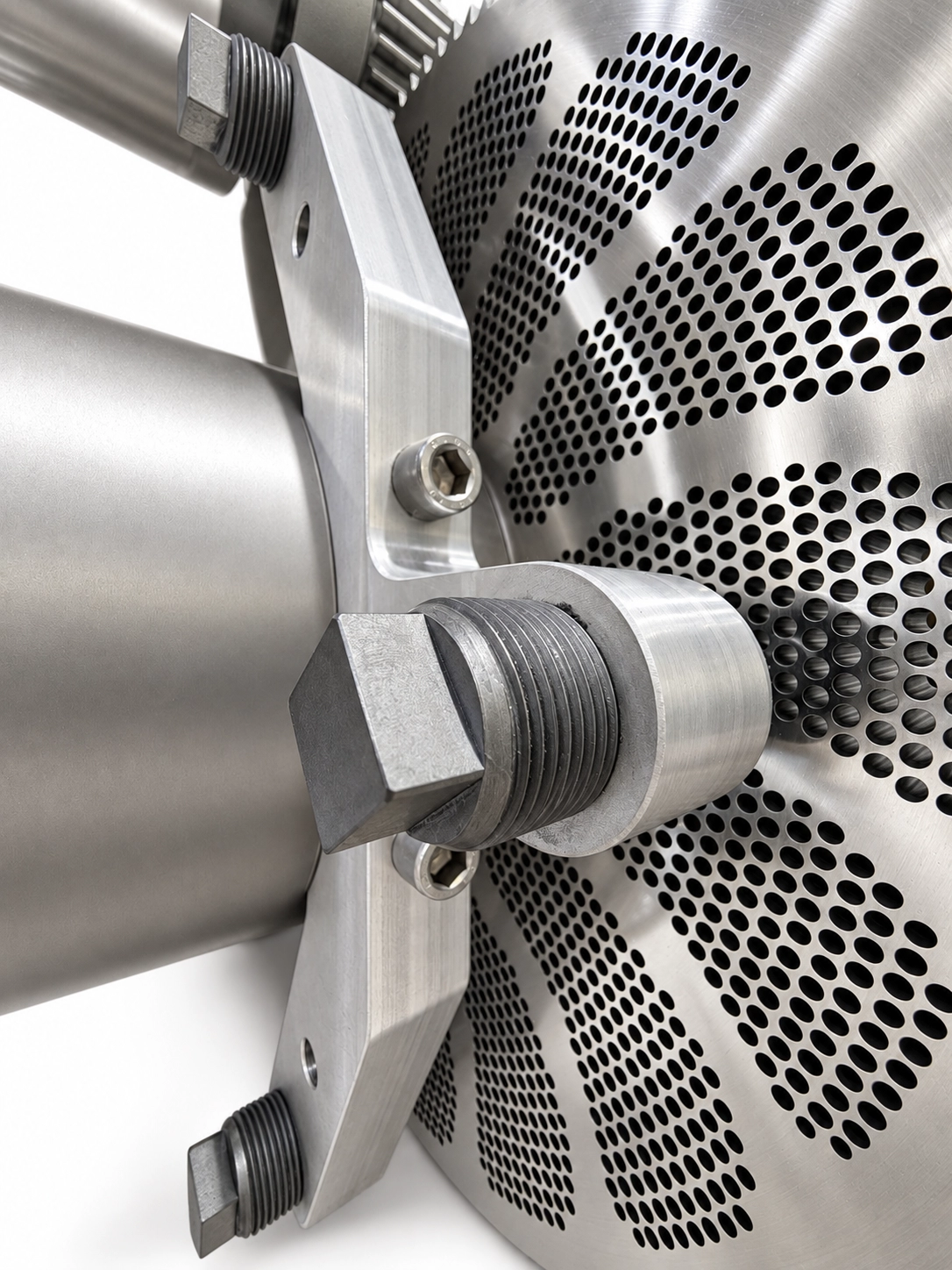
Continuous melt filtration removes contaminants while the extrusion line keeps running. Fresh media or clean filter elements become available without a full production stop, reducing interruptions, restart scrap and repeated thermal changes in the polymer. The result is more usable production time and a steadier melt supply to the downstream process. The filter is selected around particle size, contaminant loading, melt viscosity and the pressure drop the line can accept.
Rotary filtration brings clean screen area into the melt path progressively, matching media renewal to the contamination entering the filter. Controlled advancement limits the pressure disturbance of each change, keeps more of the filtration area working effectively and avoids replacing an entire screen simply because one region has loaded. Patt combines this mechanism with purpose-designed flow passages, heating and materials to manage pressure stability, residence time, wear and corrosion. Rotary III, Rotary IV and Colossus apply these priorities to different line sizes, environments and filtration-area requirements.
Choose by process duty
System selection is based on contaminant load, filtration fineness, throughput, polymer stability, cleaning practice and available line space.
The proven general-purpose platform, available across seven frame sizes and a broad operating envelope.
ExploreMonoblock construction for high-temperature, corrosive and abrasive polymer service.
Explore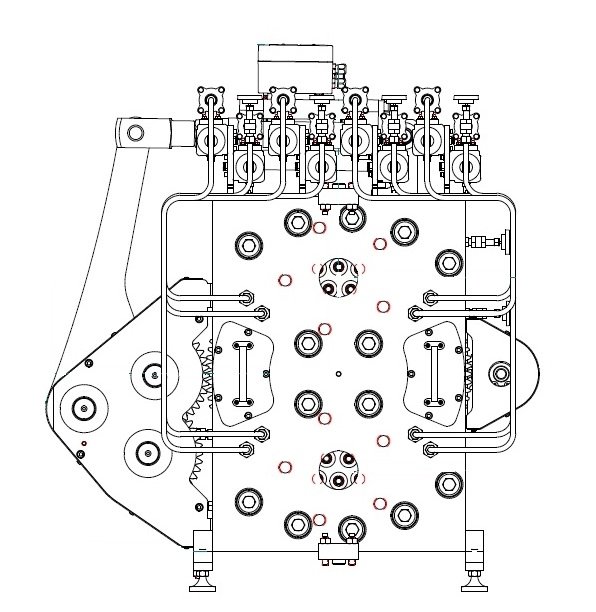
Modular candle filtration with very high active area and optional pulsed solvent backwash.
ExploreProven continuous-filtration platform
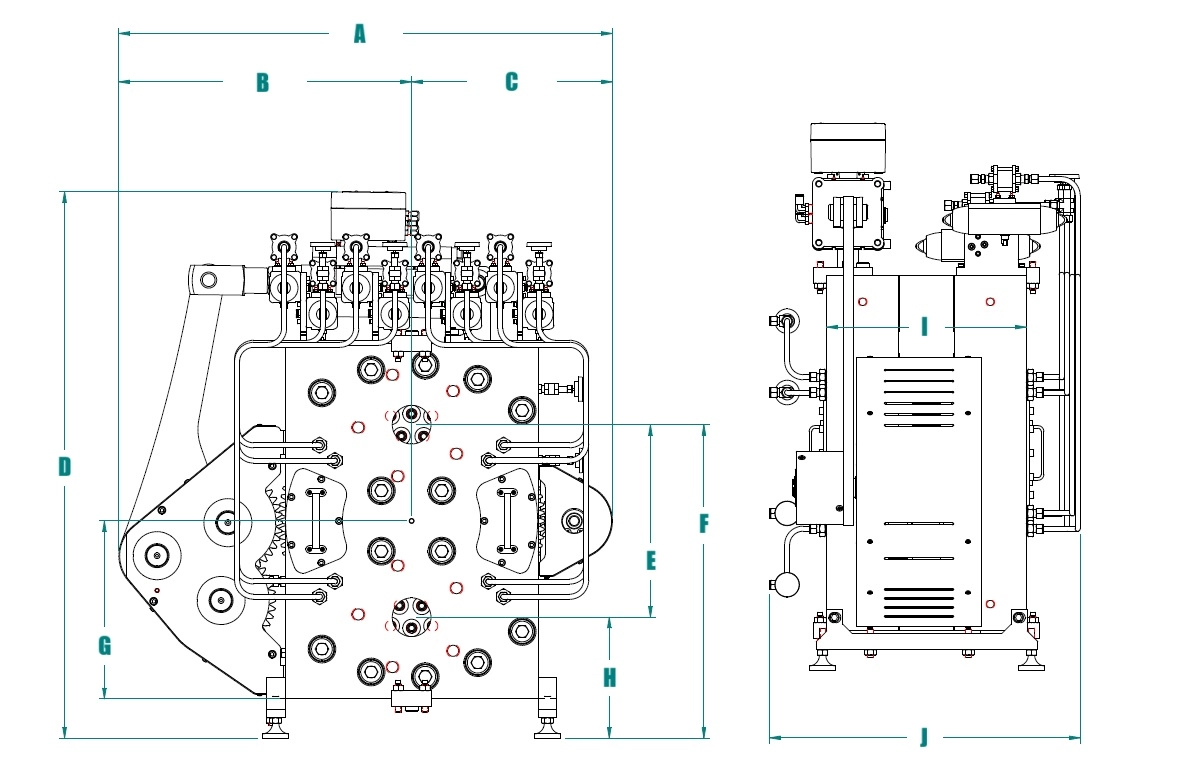
Seven frame sizes make Rotary III the flexible starting point for recycling, film, sheet and compounding lines. Continuous screen renewal and pressure control support stable extrusion; screen area and flow passages are selected around throughput, melt viscosity and contaminant loading.
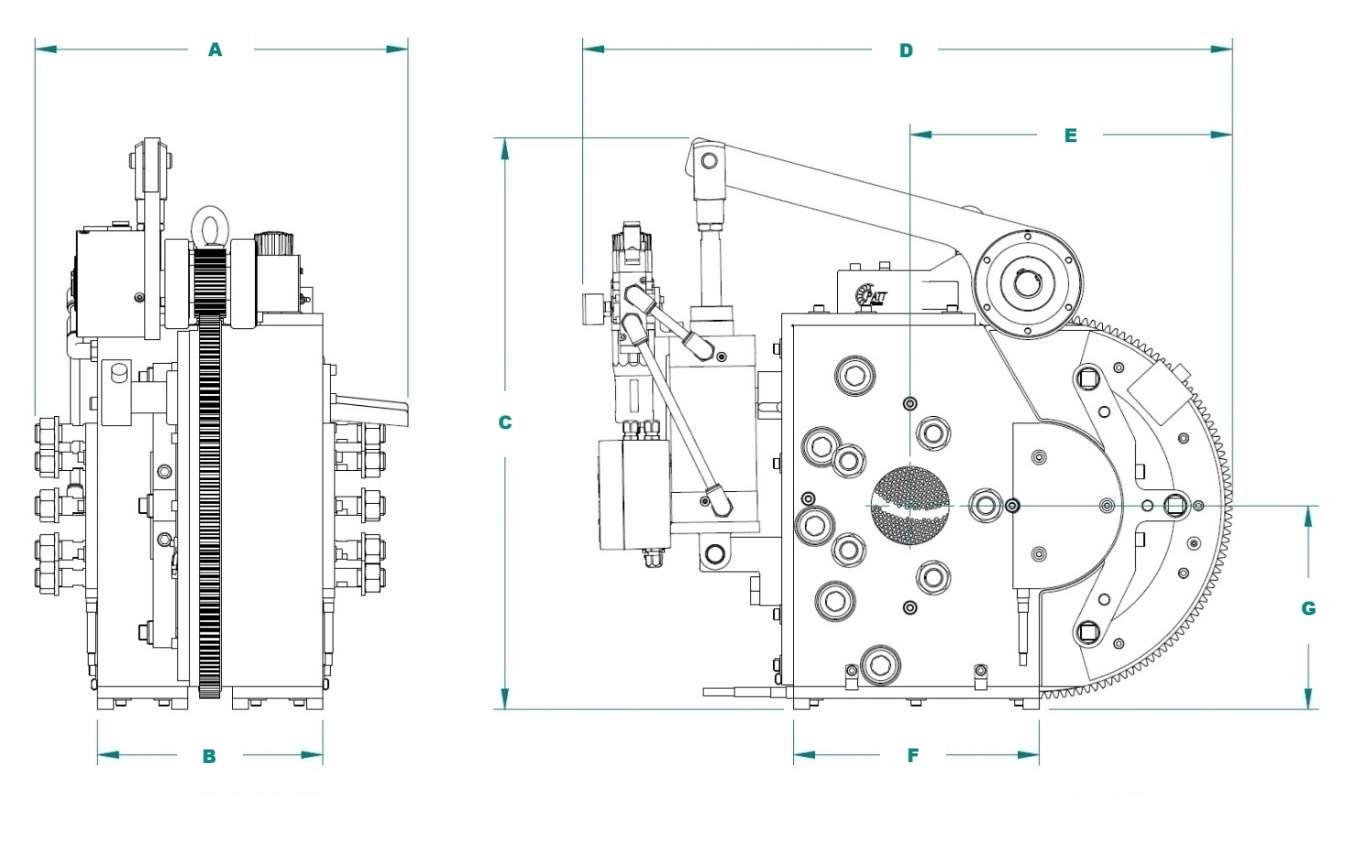
| Model | Screen area | Heating | Max. pressure | Weight |
|---|---|---|---|---|
| Rotary III A | 10–48 cm² | 3,200 W | 5,800 psi | 105 kg |
| Rotary III B | 38–100 cm² | 4,800 W | 6,500 psi | 160 kg |
| Rotary III C | 85–184 cm² | 9,800 W | 6,500 psi | 365 kg |
| Rotary III D | 150–385 cm² | 13,000 W | 6,500 psi | 1,000 kg |
| Rotary III E | 385–815 cm² | 18,800 W | 6,500 psi | 1,450 kg |
| Rotary III F | 650–1,480 cm² | 26,650 W | 6,500 psi | 2,050 kg |
| Rotary III G | 1,110–1,990 cm² | 37,000 W | 6,000 psi | 2,845 kg |
Monoblock filtration platform
Rotary IV is the monoblock platform for lines where corrosion, abrasive compounds and repeated cleaning drive tooling maintenance. Body alloy and surface treatment are chosen together for the resin and exposure, while continuous screen renewal retains Patt’s pressure-control approach.
| Model | Screen area | Heating | Max. pressure | Weight |
|---|---|---|---|---|
| Rotary IV A | 10–48 cm² | 3,200 W | 5,800 psi | 100 kg |
| Rotary IV B | 38–100 cm² | 4,800 W | 6,500 psi | 152 kg |
| Rotary IV C | 85–184 cm² | 9,800 W | 6,500 psi | 348 kg |
| Rotary IV D | 150–385 cm² | 13,000 W | 6,500 psi | 954 kg |
High-area modular filtration
Colossus provides 1,385–7,000 cm² of active candle-filtration area for fine filtration and heavy contaminant loading. It suits processes where media area, element service life and pressure drop are central sizing constraints, with modular elements and optional pulsed solvent backwash.
| Model | Active area | Heating | Max. pressure | Weight |
|---|---|---|---|---|
| Colossus C | 1,385–2,770 cm² | 28,800 W | 6,500 psi | 2,400 kg |
| Colossus D | 3,460–7,000 cm² | 46,900 W | 6,500 psi | 4,250 kg |
Integrated scope
Patt can supply the filter, custom inlet and outlet adapters, dies, breaker plates, filtration media, melt-pressure sensors and control integration as one engineered package.
Filtration upgrades
Add 80% more screen area with approximately 15 mm additional width. Patt wave-shaped breaker plates offer a compact retrofit for finer filtration, higher contaminant loads or increased throughput, with H13, Dievar, Patt Tool and Patt Structural options.
Explore the wave-shaped breaker plate upgrade
Pressure stability
Stable filtration pressure helps maintain consistent extrusion output and film thickness. Patt rotary filtration progressively introduces fresh screen area through small, controlled disk movements, limiting pressure buildup and sudden changes during screen renewal.

In pressure-driven belt or ribbon screen changers, melt pressure must generate enough force to advance the screen against friction and resistance within the assembly. Screen movement therefore depends on operating pressure and the behaviour of the polymer seals. An external mechanical puller provides an independent driving force, but transmits that force through the screen belt. Belt tension, movement increments and control response remain important considerations.
Patt’s rotary mechanism applies the driving force to a rigid disk carrying the screen packs. This allows finely controlled renewal of the filtration area without relying on melt pressure to pull a screen belt through the unit.
With conventional slide-plate operation, contamination accumulates between screen changes, increasing differential pressure. Depending on the extrusion line’s controls and pumping arrangement, this can reduce throughput. Introducing a clean screen then produces a sudden reduction in resistance, creating another disturbance for the line to manage.
The control system is integral to this performance. Accurate pressure measurement, responsive disk movement and application-specific tuning allow the filter to react as contamination changes. Matching the filtration unit with the appropriate Patt control helps protect film uniformity, maintain productive output and reduce material lost during process disturbances.
No filtration system is complete without a control strategy that makes full use of its mechanical capabilities. Patt Rotary Control uses live melt-pressure signals to coordinate media advancement, maintain the selected differential pressure and respond as the resin, throughput or contaminant loading changes. Heating control, operating limits, alarms and line interlocks support stable operation, while recipes and data logging help operators track screen consumption and repeat a successful process. Matching the control to the filter converts its available area and continuous-change mechanism into useful production performance: more consistent melt delivery, better use of filtration media and fewer avoidable disturbances. It protects the value of the filtration investment throughout the operating cycle.
Explore Rotary ControlThe filter and its media work together. Patt supplies exclusively laser-cut screens in a wide variety of meshes, with sintered or spot-welded constructions and flat or wave-shaped profiles. Select the filtration layer, support mesh and screen geometry around the polymer, contaminants and allowable pressure drop.
Explore screen packs and waved screensPatt offers training for the people who operate, clean and repair its filtration systems. Operator training covers the filter’s operating sequence, controls, screen renewal and response to changing process conditions. Cleaning training addresses the filter components, media handling and preparation for reassembly. Repair training develops familiarity with inspection points, wear components and the correct assembly sequence.
Training is organized around the installed Patt model, its control configuration and the team’s responsibilities. The aim is consistent operation, effective maintenance and fewer avoidable interruptions. Include the model and serial number when requesting training.
Request filter trainingRotary III offers continuous rotary screen changing across seven frame sizes. Rotary IV uses a monoblock architecture for demanding high-temperature, abrasive or corrosive polymer service. Colossus uses candle elements to provide a large filtration area. Selection starts with polymer, throughput, pressure, temperature, contamination and filtration target.
Yes. Patt offers configurations targeting ±1 bar pressure stability, particularly for thin-film applications. The control system, pressure measurement, filter sizing and line conditions must be specified together for that duty.
Share the polymer, throughput, temperature, pressure, contamination and target filtration. Our team will define the right system or process route.