Adaptive pressure control
Live melt-pressure input governs screen advancement to maintain the selected process condition.
ExploreProven continuous-filtration platform
Seven frame sizes make Rotary III the flexible starting point for recycling, film, sheet and compounding lines. Continuous screen renewal and pressure control support stable extrusion; screen area and flow passages are selected around throughput, melt viscosity and contaminant loading.
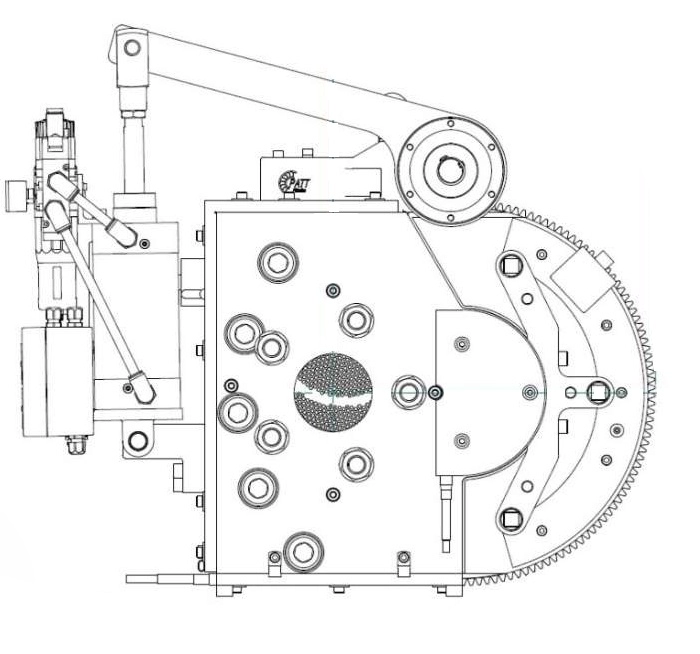
The Commander and Pattriot filter families evolved into today’s Rotary III range. Commander corresponds to Rotary III sizes A–D; Pattriot, also known as Patriot, corresponds to sizes E–G. The current Rotary III specifications are presented on this page.
For an existing installation, send the model, serial number and photographs of the nameplate and assembly. These details help Patt identify the equipment and discuss operation, cleaning, repair training or an upgrade.
Discuss an existing Patt filterModel selection
| Selection factor | Application guidance |
|---|---|
| Primary niche | A broad-size rotary screen platform for lines that need stable pressure during media renewal. |
| Typical process duties | Recycling, film, sheet, compounding and specialty extrusion; media chosen for the required particle retention. |
| Sizing inputs | Throughput, viscosity at operating temperature, clean-screen pressure drop, contamination and target fineness. |
| When to compare another family | Compare Rotary IV for monoblock corrosion-focused construction; Colossus for substantially greater media area. |
Operating advantages
Continuous screen advancement and coordinated control reduce the disturbances associated with discontinuous screen changes.
Live melt-pressure input governs screen advancement to maintain the selected process condition.
ExploreTrack process stability and screen consumption, export data and integrate with plant controls.
ExploreFlow channels, heating, materials, adapters and safeguards are configured for the actual line.
ExploreAvailable options
Rotary III configurations can be adapted for high temperature, elevated pressure, hazardous areas and demanding filtration ratings.
rotary-iii
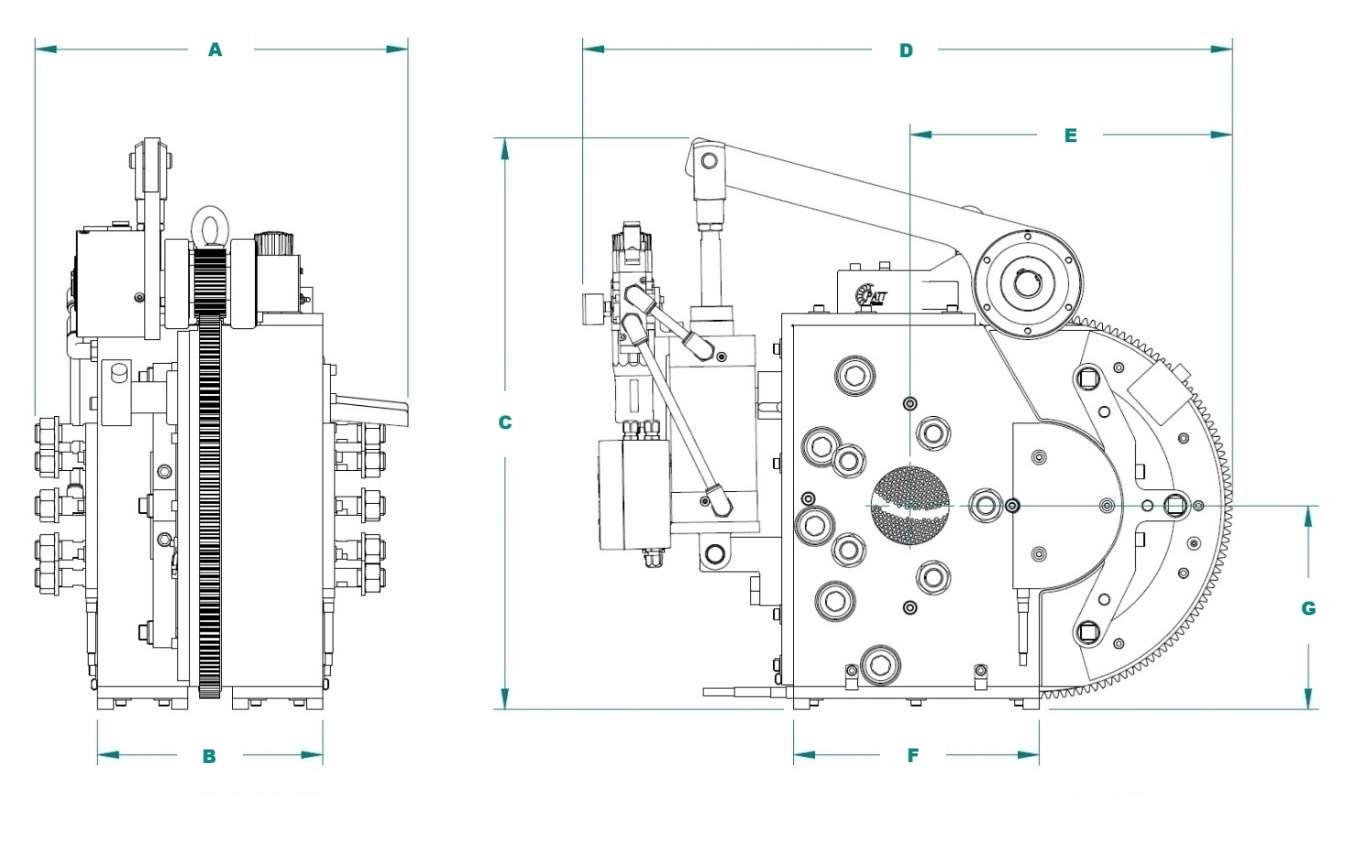
| Model | Screen area | Heating | Max. pressure | A | B | C | D | E | F | G | Weight |
|---|---|---|---|---|---|---|---|---|---|---|---|
| Rotary III A | 10–48 cm² | 3,200 W | 5,800 psi | 280 | 180 | 580 | 570 | 251 | 170 | 166 | 105 kg |
| Rotary III B | 38–100 cm² | 4,800 W | 6,500 psi | 300 | 224 | 586 | 676 | 315 | 205 | 203 | 160 kg |
| Rotary III C | 85–184 cm² | 9,800 W | 6,500 psi | 355 | 288 | 733 | 875 | 419 | 245 | 258 | 365 kg |
| Rotary III D | 150–385 cm² | 13,000 W | 6,500 psi | 681 | 435 | 1,020 | 1,085 | 550 | 270 | 334 | 1,000 kg |
| Rotary III E | 385–815 cm² | 18,800 W | 6,500 psi | 740 | 494 | 1,205 | 1,265 | 706 | 300 | 392 | 1,450 kg |
| Rotary III F | 650–1,480 cm² | 26,650 W | 6,500 psi | 852 | 607 | 1,347 | 1,445 | 860 | 335 | 431 | 2,050 kg |
| Rotary III G | 1,110–1,990 cm² | 37,000 W | 6,000 psi | 933 | 664 | 1,445 | 1,600 | 992 | 351 | 471 | 2,845 kg |
Specifications are configuration-dependent and are confirmed during application review.
Share the polymer, throughput, temperature, pressure, contamination and target filtration. Our team will define the right system or process route.