Plastics recycling
Variable contamination, screen consumption and pressure rise demand area, control and serviceability.
ExploreApplication engineering
A filtration system is selected from the interaction between melt stability, contaminant load, target quality, throughput, pressure, temperature and cleaning practice.
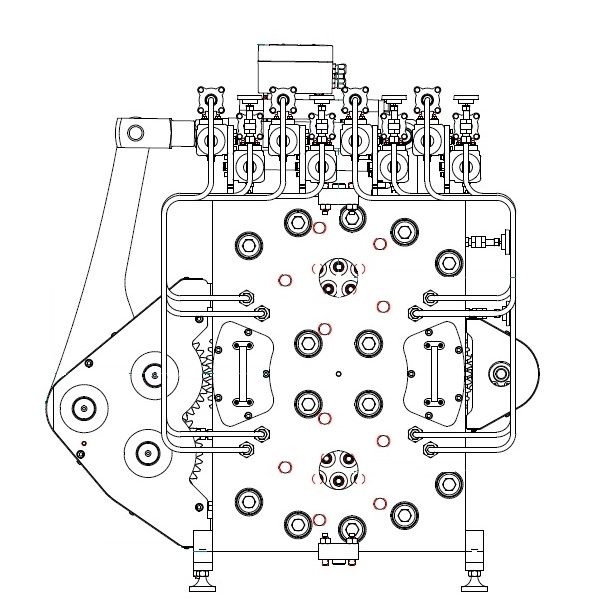
Representative duties
These application groups guide the first engineering review; final selection is based on actual process data and samples where necessary.
Variable contamination, screen consumption and pressure rise demand area, control and serviceability.
ExplorePressure stability and defect control are prioritized where small disturbances affect gauge or appearance.
ExploreThermal stability, residence time, sealing and body material become central for PEEK, PEKK, PEI and related polymers.
ExploreAdditional environments
The filter architecture, body material, surface treatment, sensors and cleaning method must be considered as one service system.
Corrosive off-gassing and cleaning exposure require attention to every wetted and heated component.
ExploreAbrasive contact influences flow path, component hardness, sensor diaphragm and service interval.
ExploreFine filtration, formulation value and short production campaigns reward precise control and fast changeovers.
ExploreScreen changers by process
Use these starting points to choose a screen changer for plastic extrusion, recycling and compounding lines. Final selection follows the polymer, throughput, contamination load, filtration target and allowable pressure variation.
| Process | What threatens production | Patt starting point |
|---|---|---|
| Plastic recycling screen changer | Variable, heavy contamination, rapid screen loading and rising differential pressure. | Colossus for very high active area; Rotary IV for PCR with corrosive or abrasive content; Rotary III with backwashing for cleaner streams. |
| Blown film screen changer | Small pressure disturbances change film gauge; gels and specks become visible defects. | Rotary III with Rotary Control; configurations target ±1 bar for thin-film duty. |
| Sheet extrusion screen changer | A pressure step at each screen change reaches the die and affects thickness and surface. | Rotary III continuous screen renewal; size the active area with the filtration calculator. |
| Pipe extrusion screen changer | Rigid PVC off-gassing corrodes wetted parts; long runs need non-stop filtration. | Rotary IV monoblock PVC screen changer for rigid PVC pipe and profile. |
| Compounding screen changer | Glass, mineral and carbon fillers abrade the flow path; short campaigns need fast changeovers. | Rotary IV wear-focused construction; Rotary Control recipes for repeatable changeovers. |
| Pelletizing screen changer | Contamination that reaches the pelletizing die blocks holes and accelerates knife wear. | Colossus or Rotary III ahead of the die; Patt also machines strand pelletizing dies and pelletizer knives. |
Starting points for the first engineering review, not a substitute for process data. Compare architectures in the screen changer engineering comparison.
Patt Technologies
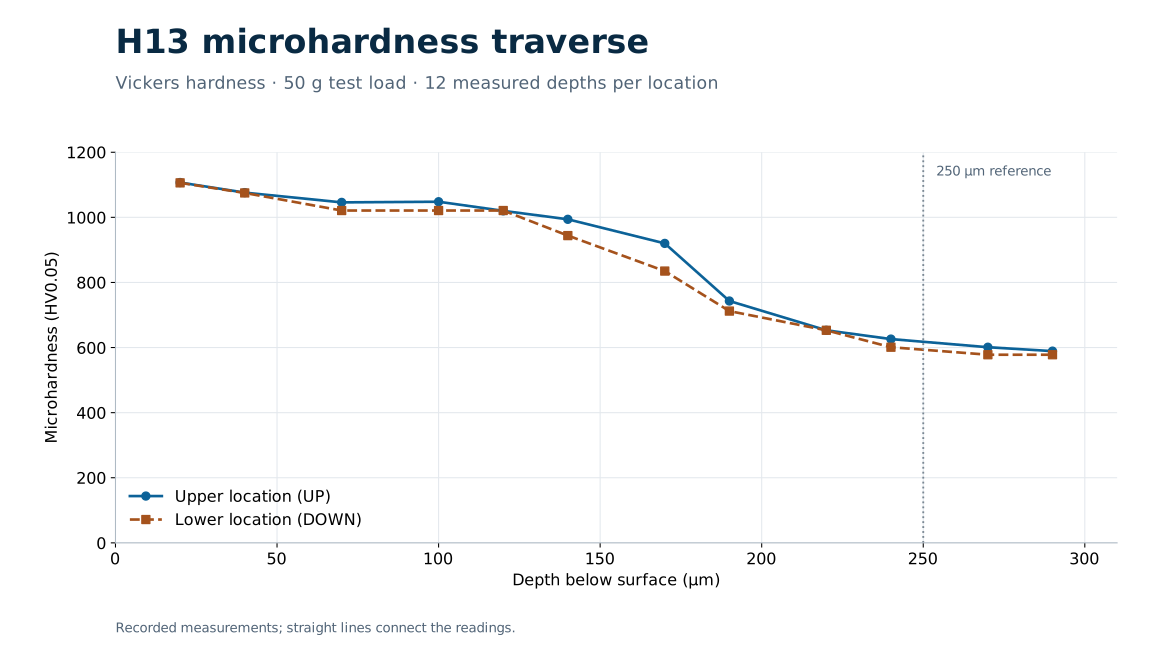
Review the micrographs and 24-point microhardness traverse from the published technical case study.
Explore
See the geometry, installation envelope and material options behind the Patt wave upgrade.
ExploreDiscuss your project
Send the polymer, throughput and operating conditions, or the drawing and material requirements for your part.
sales@patt-tech.com